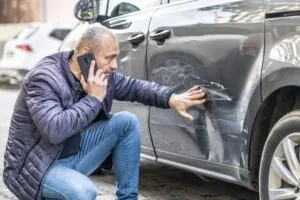

If you were hurt in a car accident and you’re now staring at a text message half-typed to your manager, you’re not alone in feeling unsure of what to say. Most people never think about how to have this conversation until they’re actually living it, usually sore, shaken, and juggling doctor’s appointments they didn’t have on the calendar last week. Here’s how to tell your employer clearly, professionally, and in a way that protects both your job and your recovery.
Why this conversation feels harder than it should
A car accident doesn’t wait for a convenient time. Evening rush hour between 4 and 7 p.m. remains one of the most dangerous windows on Ohio roads, and a large share of crashes statewide cluster around the morning and evening commute, exactly when people are driving to or from work. That means for a lot of injured drivers, this isn’t an abstract scenario. It’s a Tuesday commute home through Hamilton or Middletown that suddenly turns into missed shifts, physical therapy appointments, and an awkward call to HR.
The discomfort is normal. You’re not just delivering bad news; you’re trying to be honest about your body’s limits without oversharing, protect your job without sounding like you’re making excuses, and figure out logistics you haven’t had time to think through yet. A little structure makes all of it easier.
For a free legal consultation, call 513-894-3333
Tell your employer as soon as you reasonably can
You don’t need every detail sorted out before you say something. A short, early heads-up — even before you know how many days you’ll need off — is almost always better than silence. Waiting several days to explain an absence, even with good intentions, can create confusion or make your employer feel like they were left in the dark during a scheduling scramble.
If the crash happens on a workday or the night before your shift, a brief message that same day or the next morning is usually enough. At minimum, that message should cover three things: that you were in an accident, that you’re dealing with injuries, and that you’ll follow up once you know more. That’s genuinely all the information your employer needs at this stage — you don’t owe anyone a play-by-play of the crash itself.
Decide who needs to know, and how much
For most people, this is a two-tier conversation:
- Your direct manager or supervisor needs the practical information — that you were injured, that it will affect your schedule, and a rough sense of when you’ll know more.
- HR typically gets looped in once time off, medical documentation, or benefits become part of the picture, which is often a step your manager or HR department will guide you through.
You’re not required to disclose the extent of your injuries, who was at fault, or whether you’re speaking with a doctor or an attorney. “I was injured and I’m working through medical care” is a complete, professional answer on its own.
Click to contact our lawyers today
Choose a format that matches the urgency
If you need to report an absence immediately, a text or call to your direct supervisor is usually the right move, following whatever your workplace normally expects for calling off. Keep it brief: state that you won’t be in, explain that it’s due to a car accident and medical care, and note that you’ll follow up once you know more. There’s no need to elaborate beyond that in the moment.
If you’re planning ahead for appointments or a longer recovery, putting your update in writing — an email rather than a verbal conversation — is worth doing, simply because it creates a clear record both sides can refer back to. A written update works best when it does three things: states the date of the accident, explains that you’re receiving medical treatment and may need scheduling flexibility, and commits to keeping your employer updated as you learn more. What it shouldn’t do is assign blame, go into detail about how the crash happened, or promise a recovery timeline you can’t actually guarantee yet. Sticking to those facts gives your employer exactly what they need to plan around your absence — nothing more, nothing less.
Complete a Free Case Evaluation form now
What to say if you’re not sure how long you’ll be out
This is one of the most common sticking points, and it trips people up more than it should. You don’t need a firm return date to have this conversation. It’s entirely reasonable to be upfront that you don’t have a clear timeline yet, point to your next follow-up appointment as the moment you’ll know more, and commit to updating your employer once you do. Employers generally respond better to honest uncertainty paired with a commitment to follow up than to a guess you might have to walk back later.
Keep a simple record of what you communicate
Whether you’re texting, emailing, or speaking in person, jot down (or save) the date and general content of each conversation about your accident and recovery. This isn’t about building a case against your employer — it’s about having an accurate memory of what was said and when, which is useful if there’s ever a miscommunication about your schedule, your workload, or your return-to-work plan.
What not to do
- Don’t disappear. Even a short “still recovering, will update you Friday” message keeps the relationship steady.
- Don’t feel pressured to give a recorded statement or detailed account of the crash to anyone at work. This conversation is about your availability, not an investigation.
- Don’t downplay your injuries to seem tougher or more available than you actually are. Rushing back before you’re ready often extends recovery time, not shortens it.
The bottom line
Telling your employer you were injured in a car accident doesn’t have to be complicated. Reach out early, keep the message factual and brief, decide in advance how much detail you’re comfortable sharing, and follow up as your recovery timeline becomes clearer. The goal is simple: give your employer what they need to plan, without turning a hard week into a harder conversation.
While you’re focused on that conversation, don’t overlook the other side of your recovery: making sure your injuries, lost income, and medical bills are actually covered. Kruger & Hodges Hometown Injury Lawyers helps injured drivers across Hamilton, Middletown, Eaton, Wilmington, Washington Court House, Circleville, Urbana, Xenia, and Bellefontaine understand what their case is worth and handles communication with insurance companies so you’re not managing that on top of work and recovery. A free consultation costs nothing and can clarify what to expect in the weeks ahead, both at work and with your claim.
Call or text 513-894-3333 or complete a Free Case Evaluation form

Josh Hodges is a personal injury lawyer and co-founder of Kruger & Hodges. A working-class kid who became an attorney, Josh built his law firm to serve everyday people across every town in Ohio. He has personally handled or directly supervised the successful completion of over 1,000 personal injury cases, from car wrecks and dog bites to wrongful death claims.
He is a sought-after speaker in the legal community, often appearing on podcasts and at conferences where he helps other lawyers run better law firms that make a real impact in their local communities. Josh loves mentoring young lawyers and is known as a creative thinker both in and out of the courtroom. When he’s not fighting insurance companies, you’ll find him with his wife and kids, filming local business spotlights, or walking the neighborhoods where his clients live.
Josh’s early legal career included working for one of the largest law firms in the Midwest, where he gained extensive experience in defending personal injury claims and representing major corporations and government entities—experience rare among local attorneys.
Eventually, Josh returned to his hometown of Hamilton, Ohio, to serve the community he loves. He now practices personal injury law across Southwest Ohio and lives in one of Hamilton’s historic neighborhoods with his wife and children. Known as “The Hometown Lawyer,” Josh not only advocates for his clients but also actively supports and highlights local businesses and leaders through his social media platforms.